So our country has been taken over by criminals manipulating crazy people, and these criminals and crazy people have brought our country into a catastrophic war that will, at the very least, cause terrible harm to billions of people. And there is the very real possibility of a global economic collapse and even nuclear weapons being used with unimaginable horrors to follow.
I don’t mean to be alarmist, but that is the consensus of the brilliant and knowledgeable people I listen to. And as I’ve written before, there is almost nothing, practically speaking, that I or anyone I know can do about the situation except hope and pray for a better scenario to unfold.
So I’ve been feeling sad and worried about this for many weeks now while carrying on with gardening, shopping, cooking, walking, communicating with friends, chopping kindling, meditating, writing a novel, playing piano, and recording new songs.
I recently completed an album of songs entitled Much Too Beautiful. I’m now waiting for copies of the CD to arrive, after which I will arrange for the tunes to be available from various digital platforms so you’ll be able to hear them. In the meantime I’ve been listening to the album, 26 tracks, and loving the collection of piano solos, songs, and poems accompanied by piano music.
One of the tunes is a piano improvisation entitled The Golden Light. I recorded this improvisation to be the musical accompaniment to my story The Golden Light that appears on the audio book I just made of my book Oasis Tales of the Conjuror and other stories, available from Apple and Audible and Amazon. The story is about two young men, soldiers, lost in a tropical jungle in the aftermath of a battle that left one of them, Kersh, badly wounded, and the other, Moony, trying to keep Kersh alive.
Kersh has no conscious understanding of the spiritual aspects of reality or any knowledge of the natural world, whereas Moony is a thoroughly spiritual being deeply connected to animals and plants and the forces of nature. In the course of their odyssey, Moony tries to teach Kersh about the golden light, an ethereal light capable of healing and transforming us. I improvised a piano piece to go with the audio version of the story and to be on the album Much Too Beautiful.
I find listening to the piano solo The Golden Light wonderfully trance-inducing and I’ve been listening to it every night before I go to bed. Last night as I was listening to the piece I found myself thinking about the terrible war and feeling at a loss about what to do, and in the music I heard be a warrior of love.
I take this to mean that along with hoping and praying for peace we can be warriors of love, whatever that means to you.
I published this collection in 2020, the novella Oasis Tales of the Conjuror being the only futuristic fiction I’ve ever published, and The Golden Light the only existential war story I’ve ever written. Also included in the collection is my most successful performance piece, the Depression-era fable Of Water and Melons, along with two delightful stories set in California circa 1976: When Is It Done? and Clumsy Booby.
For the audio book I performed piano improvisations to conclude each of the chapters composing Oasis Tales and to enhance the other stories in the collection. Several of these improvisations will appear on my upcoming music album Much Too Beautiful, soon to be released.
The e-book editions of Oasis Tales of the Conjuror and other stories are available for just 2.99 from Apple, Amazon, and Kobo, and the paperback is widely available, too.
We’ve been having lots of rain this week, much needed, and the potholes on our street are now little muddy pools. I write to the Mendocino County Department of Transportation a couple times a year and send pictures of our street that badly needs to be paved anew, but in fifteen years we have only managed to get someone to come out once and do a little patching that lasted but a few months. Oh well. I guess they’re using our property taxes for other things.
This is the blowhole on the headlands just to the west of Portuguese Beach. The big storm swells rolling into that cave have been making some spectacular water explosions. Endlessly fun to watch.
Marcia cooked a feast for her birthday, which conveniently falls on Valentine’s Day so I rarely forget her birthday. Phew. She made baked beets and carrots to go with a scrumptious chicken tagine. I helped chop things and stir things and eat things.
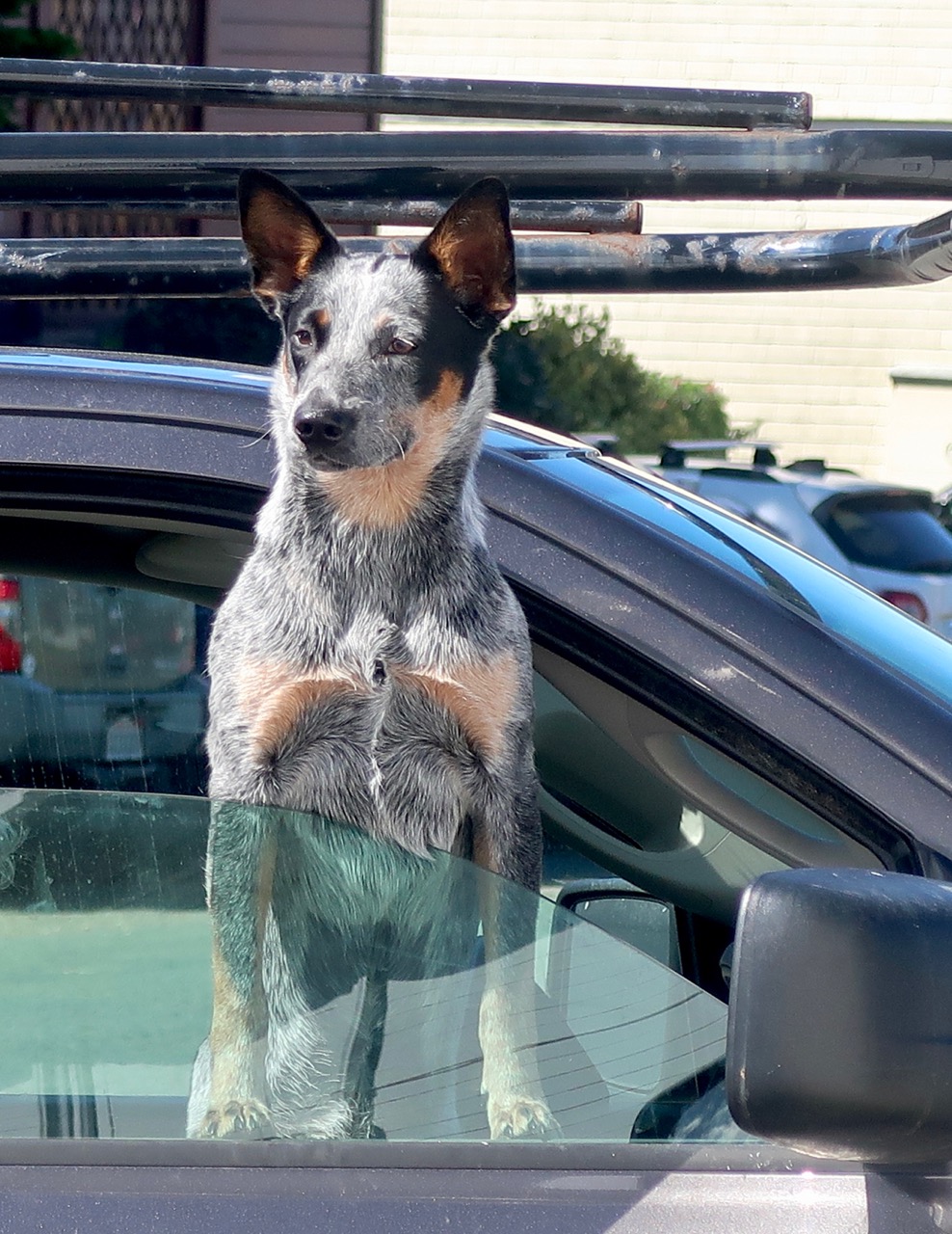
I take lots of pictures of dogs because dogs abound in Mendocino. One sunny hour between rain storms recently a beautiful cat who hangs out at a yoga studio in the village posed for me, and later that day a cat came to flirt with me on my walk in the neighborhood.
Speaking of dogs, our friends Doug and Roxana who live in Withee, Wisconsin gave a copy of my new book The Dog Who Wanted A Personto the town library and there we are. If you haven’t read the book yet or listened to the audio book you’re missing some really big fun. Trust me. By the way, breaking news: the audio edition is now available from Apple for just 5 bucks! (as well as being available from Audible.)
And speaking of great books, I’m in the middle of narrating the audio version of my book Oasis Tales of the Conjuror and other stories at Peter Temple’s studio. What an intriguing collection of stories! I’ll let you know when the audio version comes out.
This morning it hailed like mad for the third day in a row, and shortly after the hail stopped, the sun came out.
On my way down from the post office to see the raucous ocean, I came upon this cool-looking truck and thought, “The person who created this vehicle has thought long and hard about what you need to go truck adventuring.”
Moments later I stood on the cliff overlooking Mendocino Bay and snapped some pictures that might have been painted by Maxfield Parrish. What an amazing world this is.
When we moved into this house on these two acres fourteen years ago there were so many deer in the neighborhood one of the very first things we did was have a sturdy deer fence put in around one of our two acres so we could grow fruit and vegetables and roses. We left the other acre open to the deer and enjoyed the daily visits of several does and their offspring. In the fall, bucks would arrive to impregnate those does they could catch up with.
Our neighbor across the street fed the deer. He put out large quantities of feed (cob) for them every day and as a result he had a resident herd of eight to fifteen deer, depending on the survival rate of the fawns born that year. In drought years, the mountain lions would severely cull the herd and few fawns survived the summer. This herd of deer foraged for miles around here to supplement the food our neighbor fed them.
I think it fair to say our neighbor loved the deer he fed, though every year he traveled to Montana or Idaho for a month to hunt deer and elk, and he always killed a deer or two every year. Yet he never harmed the deer who hung around his house, and for generations depended on his feeding them for a large part of their daily food intake.
A few years ago our neighbor died and no one continued feeding the neighborhood deer. Within a couple months of our neighbor’s death, most of the herd had scattered and we only had three does and their progeny visiting our property. This year only a single doe and her two yearling offspring come by every few days to browse the acre of our property accessible to them.
*
Today I’m going to plant potatoes in two of our orchard tubs. Our little deer-fenced orchard gets the most sun of any place on our property that is mostly surrounded by big redwoods. Had I known we’d have such a long run of sunny days this winter, I would have planted potatoes a couple weeks ago. With luck, we should be harvesting some nice spuds in April when I’ll be planting the annual crop of lettuce, chard, peas, beets (for the greens mainly), carrots, arugula; and in May a zucchini plant or two.
Growing potatoes is fun and easy, and digging up potatoes always reminds me of hunting for Easter eggs when I was a kid.
And soon I’ll be recording songs and music for a new album, always an exciting adventure for me.
*
Here is an excerpt from an essay by Philip Whalen speaking about where his poems come from:
“Some poems arrive as dreams. Others begin from memories. Some start out in the middle of a conversation I’m involved in or words that I overhear other people speaking. An imagination of the life of some historical person may occur to me: I may suddenly suppose I understand what it felt like to be Johannes Brahms on a particular morning of his life. A landscape, a cat, a relative, a friend, a letter (or the act of answering a letter), walking, the unexpected receipt of a new poetry magazine full of work by new young writers, the arrival of a new book of poems by a friend or somebody I don’t know personally; re-reading Shakespeare or reading Emily Dickinson on the streetcar and suddenly moved to tears; shopping for vegetables, making love, looking at pictures, taking dope, sitting still and looking at whatever is happening in front of me, getting a haircut, being afraid of everybody and everything, hating everybody, playing music, going to parties, visiting relatives, riding in trains, buses, taxis, steamboats, riding horses, getting drunk, dancing, praying, practicing meditation, singing, rolling on the floor, losing my temper, looking for agates, arguing, washing sox, teaching, sweeping the floor, operating this typewriter right now (bought in Berkeley 12 years ago and wrote ten books on it) while the cicadas and taxis all sing in ravening hot Japanese summer 1967…all this is how to write, all this is where poems are to be found. Writing them is a delight.”
“Any
sufficiently advanced technology is indistinguishable from magic.”Arthur C.
Clarke
2021. Year
of the Ox. I just made a new outgoing message for my answering machine, which reminded
me of the true story about an outgoing message I made in 1983. I thought you
might enjoy this story if you haven’t read it before or even if you have.
*
I was one of the last adults in America to get
an answering machine to go with my phone, and I only got one in 1983 because my
Hollywood agent said he wouldn’t represent me if I didn’t have an answering
machine. That Hollywood agent went on to become a very powerful person in the
entertainment world, but not before he dropped me as a client. Clearly, I was
holding him back.
In those early days of owning an answering
machine, I especially enjoyed making long rambling outgoing messages. Most of
the people who called me seemed to enjoy hearing those messages a few times,
after which they would urge me to change the message lest they go mad. Thus I
got in the habit of making new outgoing messages every few days, which habit
caused my regular callers to complain I was erasing good messages before their
friends got to hear them.
Then one day I made an outgoing message that
went viral before the phenomenon of things going viral existed. I’m speaking
about a time before the ascendancy of the internet, which was not very long ago
but now seems prehistoric. And I tell you, if by some miracle I could remember
that message and put it on YouTube today accompanied by a movie of a neato person
walking on the beach with an adorable dog, or a movie of three cute kids making
cookies from scratch, or a movie of a man reading a book with a cat on his lap,
I have no doubt the message would go viral again and I would become famous and
wealthy from hundreds of millions of hits and links and apps and downloads and
streams and the billions of pennies such prodigious sharing and streaming would
bring me.
Sadly or ironically or luckily, I only remember
the feeling of that once-in-a-lifetime
message, not the words. The feeling was one of deep contentment, of thoroughly
enjoying the moment. I recall the day I made that message was sunny and warm,
my office flooded with light, and I remember being massaged from head to toe by
the feeling—the knowing—that simply being alive was a profoundly fulfilling
adventure.
Within a few days of recording my message, the
phone was ringing off the hook. Many of my friends called multiple times so
their friends could have a listen, and then I started getting calls from people
I did not know, people who had heard about the message from friends of my
friends. And over the next few weeks I got hundreds of calls from all over
America and around the world—people calling to hear my outgoing message and leave
responses.
A poet called from Germany. After listening to
my message, he recited a poem by Rilke, first in German, then in
English—something about the coming of spring.
People partying somewhere in England called,
and when the beep sounded, those Brits applauded and shouted “Bravo!”
An elderly woman called from Seattle and said,
“I see why my daughter wanted me to hear your message. I can’t stop smiling.
I’m going to call again and then tell my friends to call you.”
A man from Scotland left a long friendly-sounding
message ostensibly in English, but no matter how many times I listened to his
enchanting spiel, I could not understand him.
A bunch
of children called, and when the beep sounded, they laughed and giggled and one
kid shouted, “You a silly poo poo!”
A woman called from France and left a message
my neighbor translated for me: “I adore what you say and want to have your
child.”
I felt like I’d won the Pulitzer Prize, minus
the prize money.
That message made people happy. Those words
made people laugh and cry and rejoice; and many callers responded with
impromptu continuations of the message—addenda full of love and humor and
gratitude. That message was an elixir, a soothing salve, and some sort of
answer to the question: why are we here?
I kept that globetrotting zinger on my
answering machine for a month or so until one day I got a call from a friend
who had heard the message one too many times and asked me to please make a new
one. So without a thought for posterity, I hit the Record button, improvised a
new greeting, and thereby erased the greatest outgoing answering-machine
message I’ve ever made.
I only heard the message one time, and that was
immediately after I recorded it and checked to make sure it sounded okay.
Oh I wish I could remember those remarkable words that inspired so many people to call and leave such lovely messages. I remember the tone, a tender fearlessness—but the words elude me.
Speaking of tender fearlessness, my two new books of stories Little Movies tales of love and transformation and Oasis Tales of the Conjuror and other stories are now widely available in paperback and as e-books. You can order copies of the paperbacks from your local bookstore or from various online sources, and e-books from all the various e-book sites. Your reviews are much appreciated.
I’m happy to announce the publication of my new book Oasis Tales of the Conjuror and other stories. Some of you may be familiar with my science-fiction novella Oasis Tales of the Conjuror because I brought out a coil-bound edition of the novella nine years ago and several readers declared it their favorite of my fictional creations.
So because I’m glad Little Movies is available as a paperback and e-book online, and the paperback can be ordered from your favorite local bookstores, I decided to bring out Oasis Tales of the Conjuror in the same way and couple the slightly revised novella with two of my longer short stories The Golden Light and Of Water and Melons and two shorter tales When Is It Done? and Clumsy Booby. The collection makes for a lovely 200-page paperback and e-books.
For those of you who like supporting your local bookstore, you may
order the handsome paperback of Oasis
Tales of the Conjurorand other
stories from them, as well as the paperbacks of Little Movies tales of love and transformation and Buddha In A Teacup.
The Kindle, Apple, Kobo, and Nook e-book editions of Oasis Tales of the Conjuror and other stories will be available in a few weeks. I hope you will share this announcement with your sci-fi and short story-loving friends. Your reviews on Goodreads, Amazon, and Barnes & Noble are very much appreciated.
Here are the first four chapters of Oasis Tales of the Conjuror.
In a land where the rainy season lasts four
moons and drought rules nine, the tiny paradise possesses both abundant water
and fertile soil. Cradled by rugged mountains to the west and north and east,
with a vast desert lapping her southern fringe, the oasis and her six hundred
citizens are loosely allied to the city of Tropolis, a hundred miles to the
north.
A wall
of stone twenty-feet-high and four-feet-thick encloses the oasis entirely, save
for a breach in the containment at the southeast corner where waters of the
marsh flow into the desert. This great wall was completed fifty years ago in
the aftermath of a terrible war, and though the ramparts have yet to be tested
by any foe, the people of the oasis are glad for the illusion of security and the
very real barrier the wall provides against the fierce desert winds.
Nearly all the land of the oasis, three square
miles, is cultivated. Only the seventy-acre marsh and four massive granite
outcroppings are kept free of human interference for the benefit of fish and
insects and rodents and tortoises and lizards and snakes and birds.
Anza the conjuror is fifty-nine, handsome and
lean, a masterful guitarist, his brown hair turning gray. He is a widower and
lives alone. His daughters Serena and Luno left the oasis five years ago to
seek their fortunes as singers in Tropolis. Luno has a child named Desai, a boy
much loved by his grandfather. Serena has yet to give birth.
Anza’s
commodious house overlooks his three acres of ground. One acre is wild, a haven
for birds and bees and tangles of wild vines and fourteen promising oak trees.
One acre is given to grapes that Anza trades to Tul for the making of wine. And
one acre is given to fruit and nut trees—apricots, apples, almonds, walnuts,
and plums—and to a garden of vegetables and flowers and amaranth. Anza also
keeps quail for eggs, rabbits for meat and pelts.
The
conjuror’s supreme wish is for Serena, Luno, and Desai to leave Tropolis and
come live with him in the oasis.
One morning in the first days of the dry time,
old man Chesha, short and stout and stiff-legged, mounts his skinny donkey and
rides from his home at the northern end of the oasis to visit Anza in the
south. Chesha intends to hire the conjuror to cure his fig trees of an invisible
malady. To pay for the conjuring he will give Anza three ounces of black tea, a
valuable offering. Chesha is renowned for his stinginess. Thus giving Anza
three ounces of black tea will be a most painful sacrifice for the old miser.
“Stone and lumber,” mutters Chesha, frowning
at Anza’s house of oak and brick. “They say his house stays cool on the hottest
days, while my hovel of twigs cooks me cruelly. I might as well have no house
at all. See how rich he grows from conjuring. I work from morning until night
to make ends meet, while he waves his hand and gifts rain down on him.”
A black cat sits in a patch of sunlight on
Anza’s threshold, gazing curiously at the old man on the donkey.
“Anza,” shouts Chesha, disdainful of those who
keep pets. “I have tea for you, but I will only pay if…”
“Welcome, my friend,” says Anza, appearing in
his doorway. “What brings you so far?”
“I think you know,” says Chesha, fearing to
look at the conjuror. “My fig trees. The fruit is late. Very late. You knew I
was coming, didn’t you?”
“I’m a conjuror,” says Anza, smiling at the
old man. “Not a seer.”
“Will you conjure for me?” asks Chesha,
whimpering. “If my trees won’t fruit I’m ruined.”
“I will come at dusk,” says Anza, gazing at
the cloudless sky. “But before I arrive, you must water your orchard and leave
a cup of wine under each of the trees.”
“Seventeen cups?” cries Chesha. “Are you mad?
I am not rich. I live in a hovel. I work from morning until night to make…”
“A cup of wine for each tree, my friend,” says
Anza, closing his eyes. “And water your trees deeply else the cure will fail.”
∆
Chesha rides home in a fury, whipping his
donkey with a bamboo stick. “Seventeen cups. Seventeen! I have but two cups in
my house. Where am I to get fifteen more cups in which to pour the wine? I have
the wine, but it’s meant for me, not to be wasted on trees.”
The truth, however, trumps the old man’s
outrage, for Chesha is the second wealthiest citizen of the oasis, a notorious
glutton and a guzzler of three and four bottles of wine every day. What’s more,
his fortune is derived entirely from the sale of his fabulous figs. No other
fig trees in the oasis bear so heavily or produce such delicious fruit, though
Chesha has never watered or fed them. And no one knows how old his trees are,
for none among the living was alive when the magnificent trees were planted.
Chesha,
who never married, inherited his house and five acres from his Aunt Bysar when
he was thirty, a bequest that made him rich beyond his wildest imaginings. His
figs bring buyers from near and far, and his days are filled with bargaining
and selling and counting his gains.
But now the fruit is late emerging, very late,
and for the first time in his life Chesha faces the prospect of poverty. So the
old miser purchases fifteen clay cups from Uma the potter and irrigates his
orchard, though it pains him to spend water he might otherwise sell to his
neighbors.
When at last Chesha has placed a cup of wine
near each of his trees, he shakes his gnarly fist at the golden horizon and
grumbles, “There. I have done what the conjuror demanded. Now he must work his
magic and bring me greater gains than ever before.”
∆
Tambourines and drums announce the coming of
Anza at the head of a procession of seventeen people.
“What is this?” splutters Chesha, sneering at
the conjuror. “I hired you, Anza. Not
these others. This is no wedding. My trees are dying.”
“I have come to conjure,” says Anza, bowing to
the fig trees. “These good people are my helpers, one for each of your trees.”
And the people go into the orchard and take up
the cups.
“What are they doing?” cries Chesha, stamping
his feet. “How dare they drink my wine?”
Anza raises his hand to silence the old man.
“If my conjuring is to succeed, your trees must all drink in the same moment.”
“If these people pour my wine into the ground
and my trees do not fruit,” says Chesha, glowering at Anza, “I will give you
nothing.”
“And if the fruit emerges?” asks Anza, smiling
slyly. “Then what will you give?”
“Three ounces of black tea,” says Chesha,
gritting his teeth. “We bargained so this morning. You agreed to come for that
price and that is what I will pay, but only if….”
“I agreed to come,” says Anza, nodding slowly.
“But I will require more than three ounces of tea to ease the malady of these
trees.”
“How much?” cries Chesha, wringing his hands.
“I am a poor man. Without my figs, I will starve.”
“But if your trees give forth their bounty,
you will be rich. So I ask you, my friend, to give one of every four of your
figs to these people who are not so fortunate as you, and to give them a
quarter of your harvest for the rest of your life.”
“These people?” says Chesha, glancing furtively
at the men and women. “Who are they that I should give them my figs?”
“Your brothers and sisters,” says Anza,
raising his hands to the sky. “Now I will conjure. Are we agreed on the price?”
“Brothers and sisters? They lie! I have no
brothers or sisters.”
“Then we will go,” says Anza, beckoning to his
helpers. “We will leave you to your cups of wine and your barren trees.”
“Wait!” cries Chesha, terrified. “I agree. One
of every four figs to these people. For the rest of my life. Now conjure and
save my trees.”
Anza gestures for his helpers to give the wine
to the trees, and as the precious liquid seeps into the ground, Anza falls to
his knees and presses his forehead to the ground.
Now the trees begin to shiver and rattle as if
swept by a powerful wind as thousands of tiny green orbs emerge on the branches
and the air grows sweet with the scent of divinity.
Anza weeps convulsively, for he has conjured
the terrible sorrow of the ancient trees, abused by Chesha for fifty years,
though they never failed to give him their fruit.
Lev is eleven, a big strong boy with brown
hair and dark green eyes. Known as the boy who loves stories, he is forever
asking people to tell him tales so he might write the good ones down. Lev has
traveled away from the oasis twice in his life, once with his father to
Tropolis to sell almonds, and once with his mother to visit her sister in the
farming commune on the shores of Blue Lake, seventeen miles to the south.
Marga is ten, tall for her age, with light
brown hair kept in a braid, her eyes the blue of morning sky. Known for her
lovely voice, she is the youngest member of the women’s choir at Southgate. She
has never traveled away from the oasis and is not greatly drawn to the outside
world.
Every few days, Lev and Marga walk from their
school at Eastern Plaza to Northgate to visit Lev’s godfather, Tornio, the
watchman of the northern gateway and the seventh oldest citizen of the oasis.
∆
The children stand on the threshold of the gateway,
scanning the hills for dust clouds presaging a bus or truck or caravan. Seeing
no sign of anyone approaching the oasis, they knock on the open door of the
gatehouse and Tornio invites them into his little room.
Tornio is tall and skinny with bony fingers
and a hooked nose, his gray eyes ringed with wrinkles gained from a lifetime of
squinting at the bright horizon. He loves visits from the children, for they
break the monotony of long days in which he has little to do.
As is his custom, Lev requests that Tornio
read the day’s entries from the gatehouse log. Happy to oblige, the old
gatekeeper dons spindly reading glasses, straddles the creaky stool behind his
desk, and places his finger at the top of the page.
“Here we are. Late morning of the third day of
the fifth moon of the dry season. I was roused from my review of yesterday’s
entries by the screeching of a hawk, she who nests in the wall some sixty yards
west of the gate. She is an exquisite raptor, seven years old, with splendid
red tail feathers and exceptionally long legs. I have taken the liberty of
naming her Twyla for I once knew a woman named Twyla, a dancer with long legs.
Given there are no Twylas among the current population of the oasis I foresee
no difficulties arising from my giving the hawk this name. Twyla is often away
hunting, for she has two fledglings to feed and I fear her mate has fallen to
feather hunters, which means she is solely responsible for the feeding of her
ravenous offspring. No easy task, I’m sure.
“At the sound of her cry, I took up my telescope
and espied a telltale dust cloud. By its volume and density, I surmised this
mass of dust to be the creation of the bus from Tropolis. My surmise proved
correct. Bus #7 (twelve seats) driven by Alix Inger, badge number 174, is
sounding quite unwell these days, like a person with a raspy cough. When I
mentioned the rasping to Alix, he replied, ‘This old gal needs an overhaul, but
what can we do with the shortages and all?’
“I remarked to Alix that he had inadvertently
made a rhyme, but he gave no indication he grasped my meaning. I discerned he
was vexed from his long journey, though he reported no difficulties en route
and said he expected none on the return trip if the bus did not break down.
“The conveyance disgorged seven oasis
residents returning from Tropolis. They reported success in trading raisins,
dates, oranges, and figs for a variety of staples, notably flour, rice, and
tea. Baza came home with two young parakeets, yellow with orange breasts,
lively and full of song. The parakeets, that is, not Baza, though Baza is
certainly lively and a fine singer.
“As is his custom, Alix parked in the shade
and slept for two hours. He then ate his breakfast and sounded his horn to
announce his departure. Three people boarded the outgoing bus, each carrying sacks
of oranges that are commanding excellent trade in Tropolis what with the
shortages.
“Alix saluted me as he drove out the gate and
drove slowly until he was clear of the oasis so as not to stir up too much dust
hereabouts. Alix is a most considerate driver.”
Lev gazes out the window, the far hills
displaying dramatic afternoon shadows. “Maybe I will be a bus driver. Wouldn’t
it be exciting to drive across the plain and over the hills to Tropolis and
back again?”
“Are there more entries?” asks Marga, smiling
wistfully.
“No,” replies Tornio, taking off his glasses.
“Only the morning bus.”
“Do you think anyone else will come today?”
asks Lev, wishing he didn’t have to go home and milk the goats. “When the sky
grows pink, caravans seek stopping places for the night. So says a poem we
learned in school.”
“No telling,” says Tornio, placing a tin
kettle on his iron stove. “I will make for us a pot of tea to share and then
you, Lev, must tend to your goats, and you, Marga, must weed your vegetables.”
Marga nudges Lev, for Tornio only serves them
tea when he has a story to tell.
“I was born eighty-three years ago,” he
begins, nodding to affirm the magnitude of the number. “In Tropolis. The great
famine having ended four years before my birth.”
“How did the famine end?” asks Marga, never
having known hunger.
“Slowly but surely the outlying communes were
able to grow enough food for everyone,” says Tornio, continuing to nod. “And,
of course, there were not so many people to feed, the famine having taken two
of every three people.”
“Two of every three,” says Lev, awestruck by
the power of death. “Imagine if two of us suddenly disappeared.”
“I can imagine,” says Tornio, dropping mint
leaves into a yellow teapot. “The famine resumed when I was seven and my family
ate little for two years. Many of our neighbors died. But this is not the story
I wish to tell.”
“May we never know famine,” says Lev, reaching
into his sack and bringing forth a small chunk of candy. He breaks the morsel
in two and gives one piece to Marga, one to Tornio.
The old man grins at the boy. “Blessings and
thanks for your generosity.”
“Blessings and thanks to you,” says Lev,
smiling at his godfather. “And for the tea we are about to drink and the story
you are about to tell.”
“Yes, yes,” says Tornio, snatching up the
kettle and dousing the mint to sweeten the air with scented steam.
“Blessings and thanks,” says Marga, popping
the candy into her mouth. “Which story do
you wish to tell, Tornio?”
“How I came to live in the oasis,” says
Tornio, adding a pinch of chamomile to the brew. “When I was not much older
than you, Lev.”
The children exchange frowns of wonder, for
though Tornio has spoken many times of his birth in Tropolis, they have never
imagined him as anything other than the old watchman of Northgate who lives
with his wife Ahdi in a stone house on the edge of Tul’s olive grove.
“When I was fourteen,” says Tornio, pouring
tea into three black cups, “I was the swiftest of runners.”
Lev and Marga snicker, for oasis children are
often admonished for their tardiness with the expression Slow as Tornio.
“Oh, I know,” says the old man, chuckling.
“I’m an ancient tortoise now, but when I was fourteen I won the race around the
outer walls of Tropolis. Thirteen miles. Against the swiftest men and women.
Indeed, my victory gained the attention of the ruling council.” He nods slowly,
savoring the memory of his triumph. “Remember, children, this was before the
revival of engines, when everything was carried by mules and on our backs, not
in buses or trucks. And the most important messages were entrusted to the
fastest runners.”
“They paid you to run?” asks Lev, dazzled by
the thought. “Now that would be a dream come true.”
“Hard work,” says Tornio, clearing his throat.
“When the war came, I ran many miles back and forth between Tropolis and our
forward army.”
“What enemy were you fighting?” asks Marga,
having only recently heard about the war from her mother.
“Peoples of the north,” says Tornio, his voice
falling to a whisper. “People just like you and me. Their crops failed. So they
came south to take food from Tropolis and her allies.”
“Thousands of people died,” says Lev,
repeating the words his father spoke but a few nights ago.
“Yes,” says Tornio, nibbling his candy. “And
there came a decisive battle won by the army of Tropolis and the peoples of the
north were annihilated, save for two hundred who rushed southward to this oasis.”
“They came here?” asks Lev, his heart
pounding.
“They came here,” echoes Tornio, gazing out
the window to the north. “You are finally of an age to hear the truth. Until
now we have not wished to disturb your childhood with such fearful history.”
Marga reaches for Lev’s hand as he reaches for
hers.
“So…” says Tornio, grimacing at the memory,
“the rulers ordered me to outrun the invaders and rouse the people of the oasis
to fight until the army of Tropolis could arrive.”
The
children hold their breaths, for as the old man speaks they seem to hear the
starving people fast approaching.
“I ran those hundred miles in less than a
day,” says Tornio, closing his tired eyes, “arriving just in time to warn the
people of what was coming. And the battle did rage for three days and nights
until the army of Tropolis came to kill the last of those poor peoples of the
north.”
“Here?” says Marga, sobbing. “Those people
were killed here?”
Tornio nods gravely. “I was badly wounded and
lingered on the edge of death for many days. But the people of the oasis would
not allow me to die. When I recovered, I helped build the walls that protect us
now. When the walls were complete, I was given work in the vineyards, and when
I married Ahdi we were given our house and two acres on the edge of Tul’s olive
grove. And when I grew too old to labor in the vineyards, I was given this job,
for I saved the people of the oasis by running those terrible hundred miles.”
∆
Walking home from the gatehouse, Marga says to
Lev, “I wonder why our people didn’t share their food with the peoples of the
north?”
“Perhaps there were too many of them,” says
Lev, wondering the same. “Even now there are people here in the oasis who don’t
have enough food. Think of Nori and how we share our school snacks with him to
quell his hunger. Imagine two hundred more without food. There would surely be
famine.”
“And two of every three of us would perish,”
whispers Marga, stunned by the thought of such enormous loss.
“There are six hundred acres within the walls
of the oasis,” says Lev, stopping at the entrance to Marga’s yard where a dozen
citrus trees shade the garden of vegetables and herbs. “With three hundred
acres under cultivation and nearly six hundred people to feed. My father says
we are too many by at least a hundred.”
“That’s why Anza’s daughters moved away,” says
Marga, nodding, “because the council decreed no new children may be born here
until at least fifty people die.”
“Who do you think will die next?” asks Lev,
taking Marga’s hand.
“I don’t want to think about death,” says
Marga, wrinkling her nose and shaking her head. “I’ll see you tomorrow.”
“Tomorrow,” says Lev, kissing Marga’s hand.
“May your dreams be full of wonder.”